
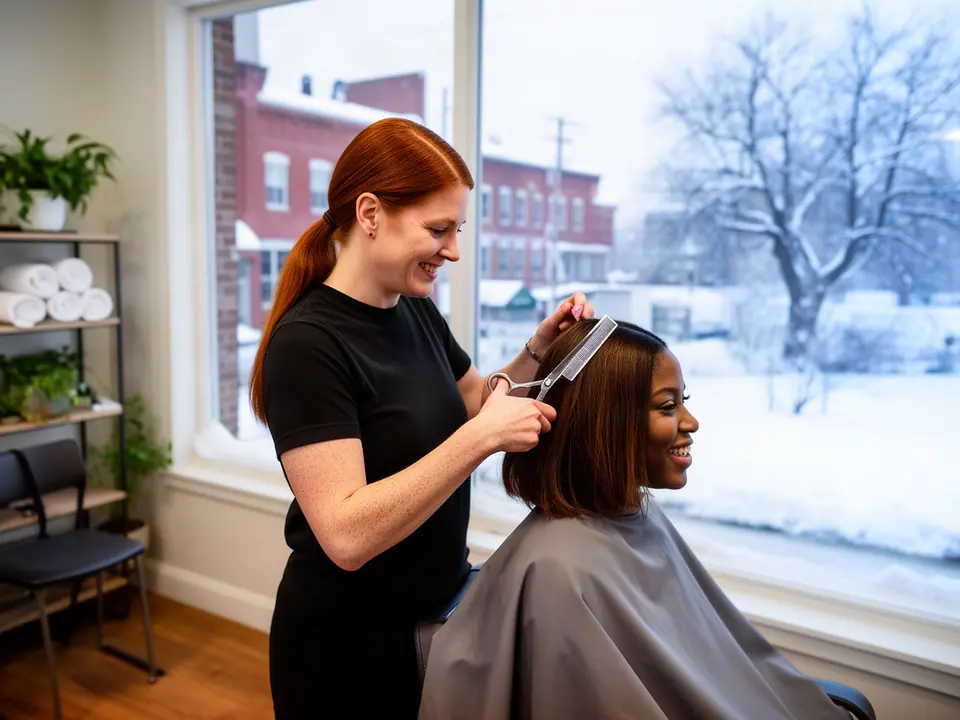
Larkpine Lending Group, an Iowa City, IA small-business funding service, lists questions to settle before funding the purchase of a nail or hair salon: what the sale includes, how revenue is earned, booth renters versus employees, the lease, equipment condition, and why a merchant cash advance is a poor fit for a purchase.
What you are buying
- Equipment: pedicure chairs, manicure stations, ventilation, dryers
- Leasehold improvements: plumbing, lighting, finishes
- The lease, if it can be assigned to you
- The name, phone number, booking system and client list
- Product inventory
Clients and technicians are not assets you own. If technicians leave, some of their clients may go with them.
Nail salon earnings: the records that answer it
No public figure answers that for a specific salon, and we will not estimate one. Ask the seller for monthly service and retail sales for several years, card-processing statements, payroll or booth-rent records, rent and product costs. Whether a given salon is profitable is a records question. Only those records answer it, and your accountant should read them.
Public data gives context, not answers. Johnson County, IA had 7 nail salon employers in 2023 (County Business Patterns 2023) and 99 nail salons with no paid employees in 2024 (Nonemployer Statistics 2024). The two programs are not added together.
Booth renters or employees?
A booth-rent salon's revenue is rent from independent technicians; a commission or wage salon's revenue is all service sales, with pay going out. A buyer of a booth-rent salon is buying a rent roll whose tenants can leave. A buyer of a commission salon is buying a working crew of technicians. Partners read the arrangement because it changes what the bank statements mean.
The lease decides a lot
Check the remaining term, renewal options, whether the landlord must approve assignment, and whether rent changes on assignment. A partner will not fund a long loan against a lease with one year left. Lease review is for your attorney.
Funding a salon purchase: how it is structured
A purchase is usually a term loan, often with part of the price carried by the seller. Equipment you add later can be financed separately. The salon funding page covers the day-to-day cash cycle.
Illustration (not an offer)
A buyer agrees a price of $120,000 for an eight-station salon. The seller carries $20,000, the buyer puts in $25,000, and a partner is asked for $75,000 on a schedule. The buyer separately budgets $12,000 for new pedicure chairs in the first year, as an equipment request.
Why a merchant cash advance is a poor fit for a purchase
A salon that takes most payments by card may be offered an advance. But a merchant cash advance is a short-term purchase of future receipts, not a loan, and a purchase price paid back that way strains the first months of ownership. It may suit a short operating need later; it is a poor fit for buying a business, since collection starts right away.
More reading
County context is on the Iowa City, IA page; other articles are on the blog.
A short checklist before you make an offer
- Twelve or more months of card statements and sales reports
- A list of technicians, how they are paid and how long they have stayed
- The lease and the landlord's position on assignment
- An equipment list with ages and condition
- The seller's plan for the transition
With these, a partner can review the purchase; without them, the review stalls.
By Larkpine Lending Group · Updated